on 04/11/2026
There's a particular kind of quiet that settles over you when you're on a Cornish beach, staring at the shingle, convinced the next pebble will be the blue one.
That's sea glass hunting. It's free, it gets you outdoors in all weathers, it's weirdly addictive, and Cornwall, with its old harbours, working ports and Atlantic swells, is one of the best places in the UK to do it!
This guide covers the practical stuff: which beaches to try, the best time and tide to go, what the colours actually mean, and what you're allowed to take home.
Where is the best place to find sea glass in Cornwall? Beaches near old ports and harbours tend to be the most rewarding. Good places to start are Pentewan, Marazion, St Ives Harbour Beach, Portreath, Towan Beach in Newquay and Watergate Bay.
When is the best time? Winter, a day or two after a storm, on a bright day, starting around two hours after high tide and carrying on as the tide drops.
Is it legal to take sea glass? Picking up a few pieces for yourself is generally fine, because sea glass is essentially litter. Taking pebbles, sand or rock is a different matter, and protected sites have their own rules (more on that below).
Old stories call sea glass "mermaid tears". The legend goes that every time a sailor was lost at sea, the mermaids wept and their tears washed up on the shore.
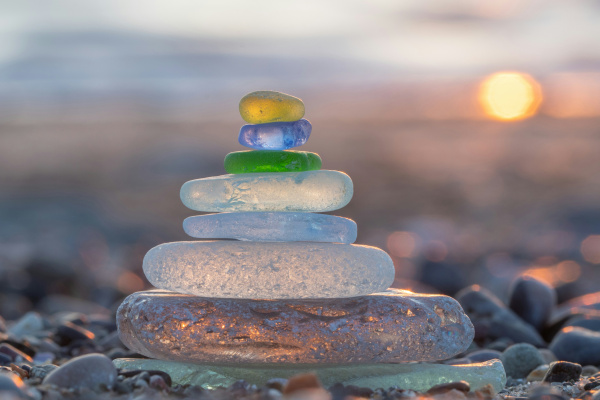
The truth is a bit less romantic and a lot more interesting. Sea glass is broken glass, from old bottles, jars, tableware and even ship lights, that has been tumbled by waves, sand and stones until the sharp edges wear away and the surface turns soft and frosted. Most of what you'll find is decades old. With luck, you might pick up a piece with a couple of centuries behind it.
That's the real appeal. Every piece has been somewhere.
Season: winter. Storms churn up the seabed and the shoreline, bringing long-buried glass to the surface. The calm days straight after a big blow are prime time. Summer beachcombing is perfectly fun, but you'll be competing with more footprints and fewer fresh deposits.
Tide: just after high tide, and on the way out. A good rule of thumb is to start around two hours after high tide, when the sea has just reworked the beach, and keep going as the water drops. Check a tide table before you leave, because a falling tide is the safest time to be exploring the lower beach.
Light: go on a bright day. Sunshine makes pieces glint against sand and stone, which makes them far easier to spot. Early morning is a favourite with serious collectors, partly for the light and partly because the beach is yours.
Technique: walk the strandline. Zig-zag slowly between the waterline and the high tide mark, and pay attention to where the shingle collects. Glass gets caught among small pebbles and coarse sand, so those patches are worth a proper look. Rock pools and the base of harbour walls are worth a peek too.
Cornwall's coast is long and the beaches are varied, so here's a region-by-region shortlist, with pointers for where to focus once you're there. Spots near old harbours and industrial stretches of coast are generally the best bet.
Towan Beach, Newquay. Known for larger pieces and even the odd rounded "sea glass pebble". Focus on the rock pools and the area around the Island House. At low tide, Towan connects to Great Western Beach, so you can wander along freshly churned shoreline, but keep a close eye on the tide so you don't get cut off.
Watergate Bay. Big Atlantic swell, well-rounded glass. It's a short drive from Towan, so the two combine neatly into one beachcombing day if you're staying around Newquay.
Holywell Bay. A big, open beach with a lot of shoreline to cover. The dunes and rock pools are the places to look.
Portreath. Surf beach, shingle near the waterline, and glass mixed into it. The waves here can come in faster than you expect when your eyes are on the ground, so look up regularly.
Trebarwith Strand (near Tintagel). Strong tidal movement keeps exposing fresh areas to search. It's a wild stretch of coast with powerful currents, so enjoy the beachcombing but save the swimming for when lifeguards are on duty.
St Ives Harbour Beach. As well as sea glass, this is a good one for pieces of patterned pottery. Try around Smeaton's Pier. Perfect if you're already in town for the galleries and the fish and chips.
Marazion. A wide beach with St Michael's Mount as the backdrop, and a good variety of colours, including purples and the occasional orange. Try the rock pools on the left-hand side of the beach.
Pentewan. A long stretch of shingle that does a lot of the polishing for you. Pentewan was once a busy port shipping out tin and china clay, and that maritime past is a big reason the beach gives up so much glass. It's close to St Austell and Mevagissey.
Before you go: parking, dog restrictions and lifeguard cover can change by beach and by season. Check the relevant council or beach website for current details before setting off.
Colour is how collectors get a clue about where a piece came from. Here's the general guide:
| Colour | Usually comes from | How common? |
|---|---|---|
| White / clear, green, brown | Milk, beer, wine and soda bottles | Very common |
| Aqua | Old bottles and jars | Fairly common |
| Cobalt blue | Old ink pots and medicine jars | Uncommon |
| Pink, lavender, purple, lime green | Perfume bottles and decorative art glass | Rare |
| Orange | Ship warning lights, decorative vases, tableware | The rarest |
If you pick up an orange piece, take a photo. You've earned the bragging rights.
For personal collecting, generally yes. Sea glass is man-made waste rather than a natural material, so picking up a few pieces to keep is not usually a problem.
A few sensible ground rules:
You don't need much, but a few things help:
Sea glass hunting makes you focus on the ground and forget everything else, which is part of the fun and also the risk. Keep an eye on the tide and the waves, stay clear of cliff bases and avoid rocky areas where you could be cut off. If you're collecting with kids, remind them not to pick up anything that is still sharp.
Rinse your finds in fresh water and let them dry. Then the possibilities are wide open:
Many people end up with a collection that is as much a memory book as a craft supply.
Sea glass hunting is a brilliant excuse for an off-season Cornwall break. Winter is when the beaches are at their best and the coast is at its quietest, and a cosy cottage with a woodburner and a hot shower is the right base for a day spent damp and cold on the shoreline.
At Select Cornwall, you can book holiday cottages, lodges and apartments across North, South and West Cornwall, from Newquay and St Ives to Marazion and Mevagissey. Heading down with a bigger group? You can book two adjacent or nearby properties in a single booking.
Browse Select Cornwall holiday cottages here
There's no single best beach, but Pentewan, Marazion, St Ives Harbour Beach, Portreath, Towan Beach and Watergate Bay are all popular and reliable places to start. Beaches near old ports and harbours tend to give the best results.
Winter, especially after a storm. Rough seas churn up glass that has been buried and push it onto the shore, so the calm day after a storm is often the best of the year.
Start around two hours after high tide, when the sea has just reworked the beach, and carry on as the tide goes out. Always check tide times first so you're not caught out by a rising tide.
Orange is generally considered the rarest, followed by other uncommon shades such as purple, pink and some blues. White, green and brown are by far the most common.
Generally, picking up a few pieces for personal use is fine, as sea glass is man-made waste rather than a natural material. Leave pebbles, sand, rocks and shells alone, and follow any signs on protected sites.
Not really. Good footwear, a pot for your finds and a bag for litter are enough. A small rake or scoop can help with sifting shingle, particularly in cold weather.
Very. It's a proper treasure hunt and costs nothing. Keep a close eye on the tide and waves, stay away from cliff bases, and make sure children don't handle any sharp, unworn glass.
You may come home with a pocketful of pebbles-that-aren't-quite-glass, a damp coat and a very full camera roll. That's the whole point. Pick a beach, check the tide, and get your eyes down.
Planning a Cornwall break around it? Find your cottage with Select Cornwall


